
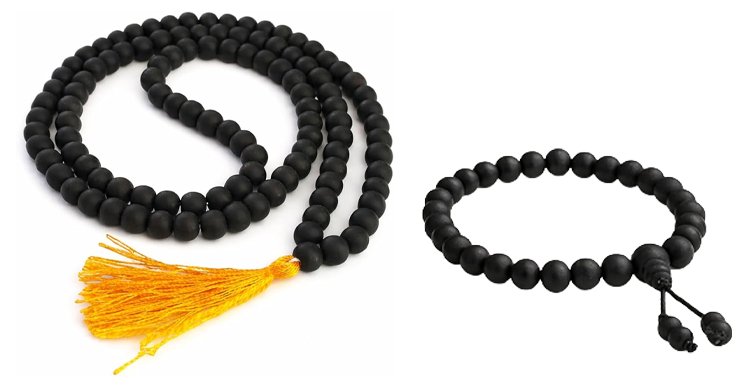
Description
Here are the primary benefits traditionally associated with wearing or using a Karungali Mala:
🛡️ Spiritual Protection & Energy
- Warding Off Negativity: It is widely used to shield the wearer from the “evil eye”, jealousy, and negative vibrations.
- Enhancing Focus: Many practitioners use it during meditation or prayers to improve concentration and stabilise the mind.
- Spiritual Growth: It is believed to help cleanse the aura and remove obstacles in one’s spiritual path, thereby facilitating personal development and deeper connections with one’s inner self.
🧘 Mental & Emotional Well-being
- Stress Reduction: The natural cooling properties of the wood are said to help soothe the nervous system, reducing anxiety and anger.
- Confidence Boost: In Vedic astrology, Karungali is linked to Mars; wearing it is thought to mitigate the negative effects of the planet, fostering courage and leadership qualities.
- Mental Clarity: It is often used by those seeking better decision-making skills and relief from mental clutter, as well as to enhance focus and promote a sense of calmness in stressful situations.
🩺 Physical Health (Traditional Beliefs)
- Body Heat Regulation: It is traditionally believed to absorb excess body heat and provide a cooling effect to the wearer.
- Skin Health: Some traditional practices suggest that the wood’s natural properties can help alleviate minor skin irritations when kept in close contact with the body, such as rashes or insect bites, providing a soothing effect.
- General Vitality: It is often worn to boost physical stamina and immunity, though these are based on ancient wellness traditions rather than clinical medicine, and some proponents claim that it can enhance overall energy levels and promote a sense of well-being.
How to Use and Maintain It
Cleansing: Before wearing it for the first time, many choose to wash it in raw milk followed by pure water to “energise” it.
Who can wear it?
It is generally considered universal—suitable for men, women, and children regardless of age.
Avoidance: It is often recommended to remove the mala while bathing or sleeping to preserve the integrity of the wood and the thread.
Note: To ensure you receive these benefits, it is important to verify that the mala is made from genuine ebony wood, as its effectiveness is tied to the natural density and “vibration” of the heartwood.
How to identify an authentic Karungali mala versus a synthetic one?
Identifying an authentic Karungali (Black Ebony) mala is essential, as the market is often flooded with chemically treated wood or plastic imitations. Authentic Karungali is prized for its density and natural properties.
Here are the most reliable ways to test for authenticity:
1. The Water Sink Test
This method is the most definitive physical test. Authentic Karungali wood is extremely dense—denser than water.
- The Test: Place the bead or the entire mala in a bowl of water.
- The Result: An authentic Karungali bead will sink immediately. If it floats, it is likely a lighter wood that has been dyed or a synthetic material.
2. Natural Colour and Bleeding
Genuine Karungali is naturally dark, but it is usually not “pitch black” like plastic.
- The Test: Soak a few beads in a glass of water for 24 to 48 hours.
- The Result: The water should turn a dark brownish or slightly reddish tint. The brownish colour is the natural resin leaching out. If the water remains perfectly clear, or if the bead turns white/pale after soaking, it is likely a fake or heavily painted.
3. Texture and Grain
With a magnifying glass or close inspection, you can differentiate between wood and synthetic materials.
- Authentic: You will see tiny, natural pores and subtle wood grain patterns. No two beads will be 100% identical in texture.
- Synthetic: Plastic or resin beads often have a perfectly smooth surface or visible “seam lines” from a mould.
4. The Heat/Burn Test
If you can spare one bead or have a loose one, you can perform a scent and burn test.
- The Test: Briefly touch a hot needle to a small area of the bead.
- The Result: Authentic wood will smell like burning timber or charcoal. Synthetic beads will smell like burnt plastic or chemicals and will melt rather than char.
5. Weight and Temperature
- Weight: Because of its high density, a genuine Karungali mala feels surprisingly heavy for its size compared to other wooden beads like sandalwood or tulsi.
- Temperature: Similar to most natural hardwoods, it has a slightly cool touch and takes a moment to adjust to your body temperature.